Close Menu
  • Home
  • Business
  • Gaming
  • General
  • News
  • Politics
  • Sport
  • Tech
  • Top Stories
  • More
    • About
    • Privacy Policy
    • Contact
    • Cookies Policy
    • DMCA
    • GDPR
    • Terms
Facebook X (Twitter) Instagram
ZamPoint
  • Home
  • Business
  • Gaming
  • General
  • News
  • Politics
  • Sport
  • Tech
  • Top Stories
  • More
    • About
    • Privacy Policy
    • Contact
    • Cookies Policy
    • DMCA
    • GDPR
    • Terms
Facebook X (Twitter) Instagram
ZamPoint
Top Stories

Private: Has dark matter finally been ‘seen’? New analysis of Fermi telescope data offers clues

ZamPointBy ZamPointNovember 29, 2025No Comments2 Mins Read
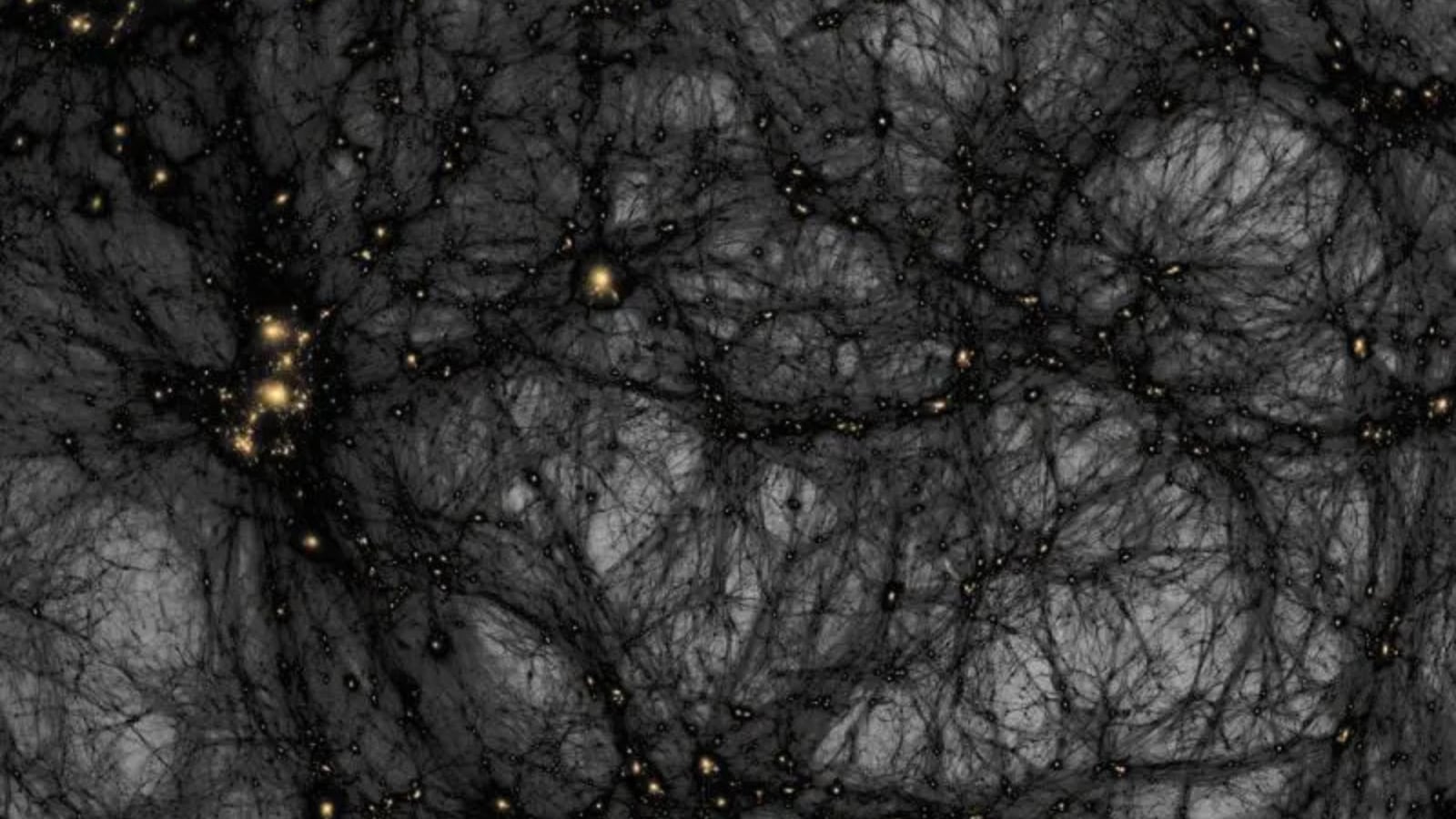
A simulation of the formation of dark matter structures from the early universe until today. Ralf Kaehler/SLAC National Accelerator Laboratory, American Museum of Natural History
Has dark matter finally been ‘seen’? New analysis of Fermi telescope data offers clues

Dark matter, which makes up about 85 per cent of the universe’s total mass, has baffled scientists for years because it does not emit or absorb light. However, almost a century after the theory was proposed, a new study claims it may have found evidence of dark matter’s existence.

For a long time, scientists assumed that there must be a large amount of matter exerting a massive gravitational force. And while we still can’t see it with our eyes or current instruments, a team of physicists has demonstrated a new approach that might finally decode the mystery.

According to Prof Tomonori Totani, an astrophysicist at the University of Tokyo, gamma rays originating from the centre of the Milky Way potentially bear a dark matter signature. “This could be a crucial breakthrough in unravelling the nature of dark matter,” he said.

To search for dark matter signals, Totani says the team used data from NASA’s Fermi Gamma-ray Space Telescope, which can identify photons across the electromagnetic spectrum. When analysing the data, he said the pattern of gamma rays matched the shape of the dark matter halo surrounding the heart of our galaxy.

While dark matter does not produce light, if dark matter particles “annihilate” when colliding with one another — similar to matter and antimatter — they would theoretically produce different particles, including gamma-ray photons.

“If this is correct, to the extent of my knowledge, it would mark the first time humanity has ‘seen’ dark matter. And it turns out that dark matter is a new particle not included in the current Standard Model of particle physics. This signifies a major development in astronomy and physics.”

Story continues below this ad

If Totani has indeed detected dark matter, it could be made of particles at least 500 times more massive than protons. However, his results must still be verified through independent analysis before anything can be confirmed.

Expand


© IE Online Media Services Pvt Ltd

ZamPoint
  • Website

Related Posts

After 2024 Wayanad landslides, Kerala is building townships but not everyone will benefit

February 2, 2026

KTR targets Congress and BJP over financial discrimination, political diversion

February 2, 2026

Brain-Computer Interfaces 2026: Medical Breakthrough Ahead

February 2, 2026
Leave A Reply Cancel Reply

This site uses Akismet to reduce spam. Learn how your comment data is processed.

Facebook X (Twitter) Instagram Pinterest RSS
  • Home
  • About
  • Privacy Policy
  • Contact
  • Cookies Policy
  • DMCA
  • GDPR
  • Terms
© 2026 ZamPoint. Designed by Zam Publisher.

Type above and press Enter to search. Press Esc to cancel.

Powered by
►
Necessary cookies enable essential site features like secure log-ins and consent preference adjustments. They do not store personal data.
None
►
Functional cookies support features like content sharing on social media, collecting feedback, and enabling third-party tools.
None
►
Analytical cookies track visitor interactions, providing insights on metrics like visitor count, bounce rate, and traffic sources.
None
►
Advertisement cookies deliver personalized ads based on your previous visits and analyze the effectiveness of ad campaigns.
None
►
Unclassified cookies are cookies that we are in the process of classifying, together with the providers of individual cookies.
None
Powered by